
Washing handmade items is the same process as washing your delicates in the sink. You will need a bit of patience and some time. Most any handmade item can be washed in the sink, and in some cases with a large item like a blanket, you can use a clean utility sink or bathtub. Make sure that the sink or container you are using is clean. I like wearing dishgloves and wiping the inside of the sink with a gentle cleaner, nothing with bleach that will transfer. Fill the sink with lukewarm water, and as the water is filling, add the detergent. I never use water that is too hot because of shrinking or fading.
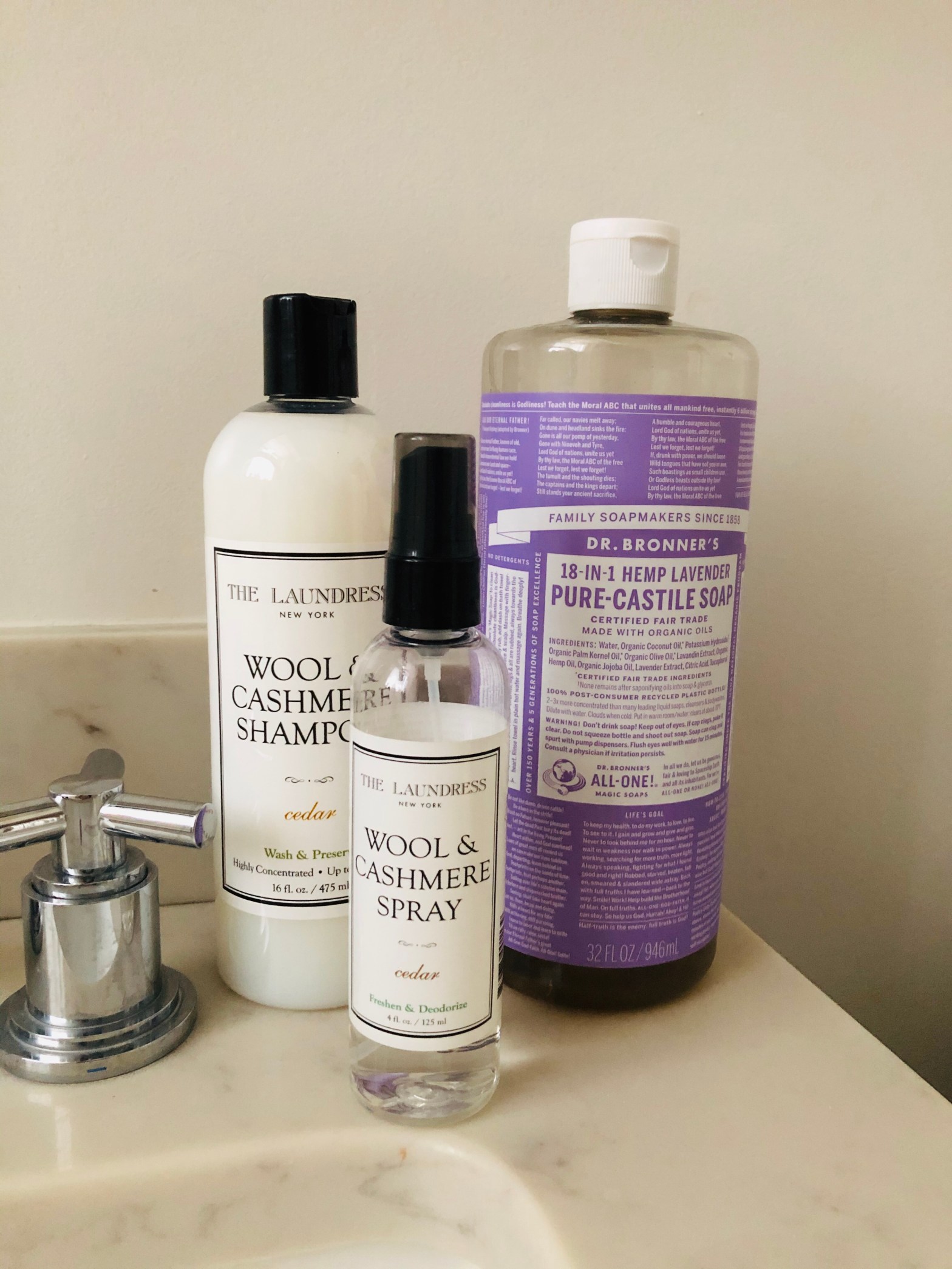
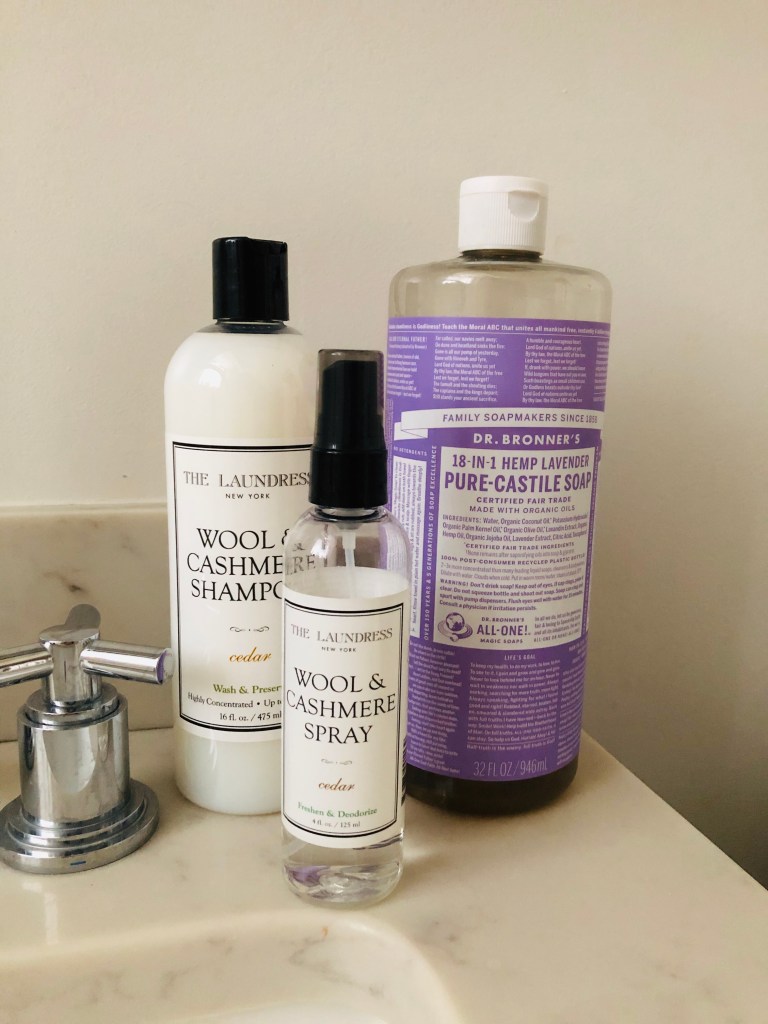
I have two favorite detergents that I use for cleaning handmade items depending on what the items are. For all my knitted/crocheted/cashmere things, I use wool and cashmere shampoo by Laundress. This shampoo is specifically designed for certain wooly materials and doesn’t tend to shrink the fibers, or leave residue. Laundress puts out a bunch of laundry cleaning items, and I have tried a few of them. If I find any noticeable stains on an item, I like to use their wash and stain bar to spot treat any areas. Laundress also has a lovely cedar spray that is safe for delicate fabrics, which I use on dry pieces inside my closet throughout the year to freshen items in between washing.
For all my other delicate handmade items, maybe things like lace or fabrics that are hand sewn, I always use castile soap by Dr. Bronner’s. Their soap comes in a large 32 oz. bottle, and a tablespoon amount always suds up nicely for something the size of a sweater. Castile soap is eco-friendly and also non-hazardous so it’s safe to have in the household with kids or pets. It is gentle for sensitive skin users like me, and I never find that my skin is irritated or the smell too powerful.
The key to remember with knit and crochet items that are made of natural fibers like wool, alpaca, cashmere, etc is that you do not want to let them soak for too long. This can destroy the shape of the fibers and wear out your item. Once the piece has soaked for maybe 10 minutes, drain the water and wash it clean. If a stain remains, you can spot clean it at this point. There is a very useful video by Wool and the Gang which shows the step by step washing process for all your knit and crochet items.
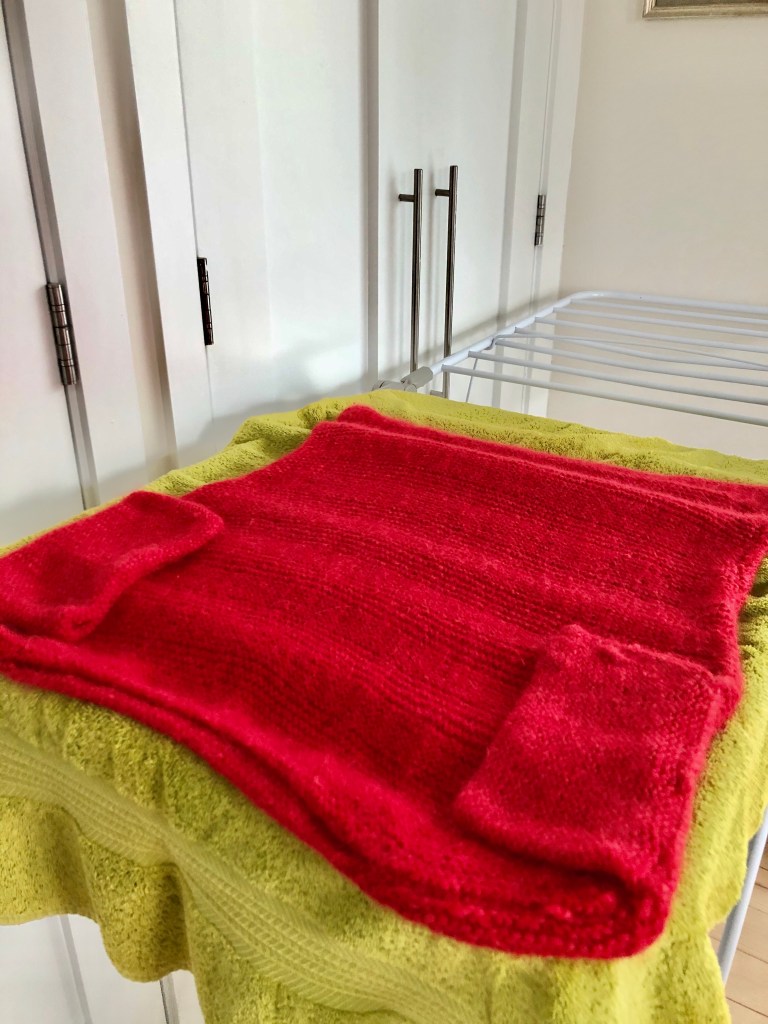
When it comes to drying your knitted and crocheted things, you should either lay them flat or hang dry. Depending on the weight of the item and/or the material, you can determine which you prefer. Most of the time the item will assume the shape it’s dried in, and require some reshaping in the drying process. I always recommend to lay flat if the item is heavy, otherwise the wet weight can pull the shape. I use a drying rack, to lay items flat, and I place a towel under them to prevent dripping. If hanging dry, hang them dry in a place that will receive good air flow. After some time drying, turn the article over or inside out to make sure that all angles are 100% dry before putting away.
What about the Washing Machine?
Washing machine is generally a no-no. Sometimes yarns, especially acrylic yarns, will say they are washing machine safe on the label. While the yarn may be ok in the washing machine, it is the handcrafted element that may not withstand the pressure. I have washed crocheted blankets in the washing machine, and sometimes they come out fine and sometimes they come out riddled with holes. Ah. This means that the integrity of the hand stitched process has not withheld to the force of the machine. In general, I recommend the hand washing process. At the very least, use the delicate cycle in a washing machine that you can trust.
What about Pilling?
When it comes to pilling, which can happen after years of use or wear, I recommend self-removal. I have been behind a woman at the dry cleaner who was showing him pills under the arms of her sweater, and she left it for him to fix. He happily rang her up for the charges. I thought to myself, I can do that for you. Pilling happens when little balls of fuzz accumulate from wear and use; usually under the arms or on the sides where you may carry a purse. There are special tools you can buy like a sweater comb or sweater stone, which assist you in getting rid of any pilling spots. You rub the comb or stone over the pills and it shaves them off by catching to their rough surface. If you do not have one of these tools at home, I also find that you can use a small pair of scissors to remove any pills. Being careful to just skim the surface, stay within the artificial fuzz and not down into the grain of the fabric. Be sure that if you are using scissors, you do not mistakenly cut a thread or yarn. Simply stick to removing the obvious balls of fuzz.
xo CitybrightKnits
 Citybrightknits